Dubai Rental Yields 2025: Where to Find the Best Property Returns
Why Dubai Rental Yields Are Among the World's Highest
Several structural factors explain Dubai's exceptional rental yield performance:
- No rent control for new contracts: Landlords can set market rents freely on new tenancies, allowing yields to track market conditions rather than being suppressed by regulation.
- Zero income tax on rental income: 100% of your gross rent is net income. In the UK, landlords pay 20–45% tax on rental profits. In Dubai, you keep everything.
- High tenant demand: Dubai's population grew by over 100,000 in 2024 alone, fueled by business migration and lifestyle relocation. More people need homes.
- Low purchase prices relative to global luxury cities: A prime Dubai apartment with a sea view costs a fraction of a comparable asset in London, Paris, or Sydney — yet rents at a globally competitive level.
The result is a yield environment that no developed-world gateway city can match.

Dubai Rental Yield by Community (2025 Data)
Here's a breakdown of average gross rental yields across Dubai's key investment areas in 2025:
- Jumeirah Village Circle (JVC): 7.5–9.5% — consistently the highest yield community for apartments
- International City: 8–10% — ultra-affordable entry, very high yields but lower capital growth
- Discovery Gardens: 8–9.5%
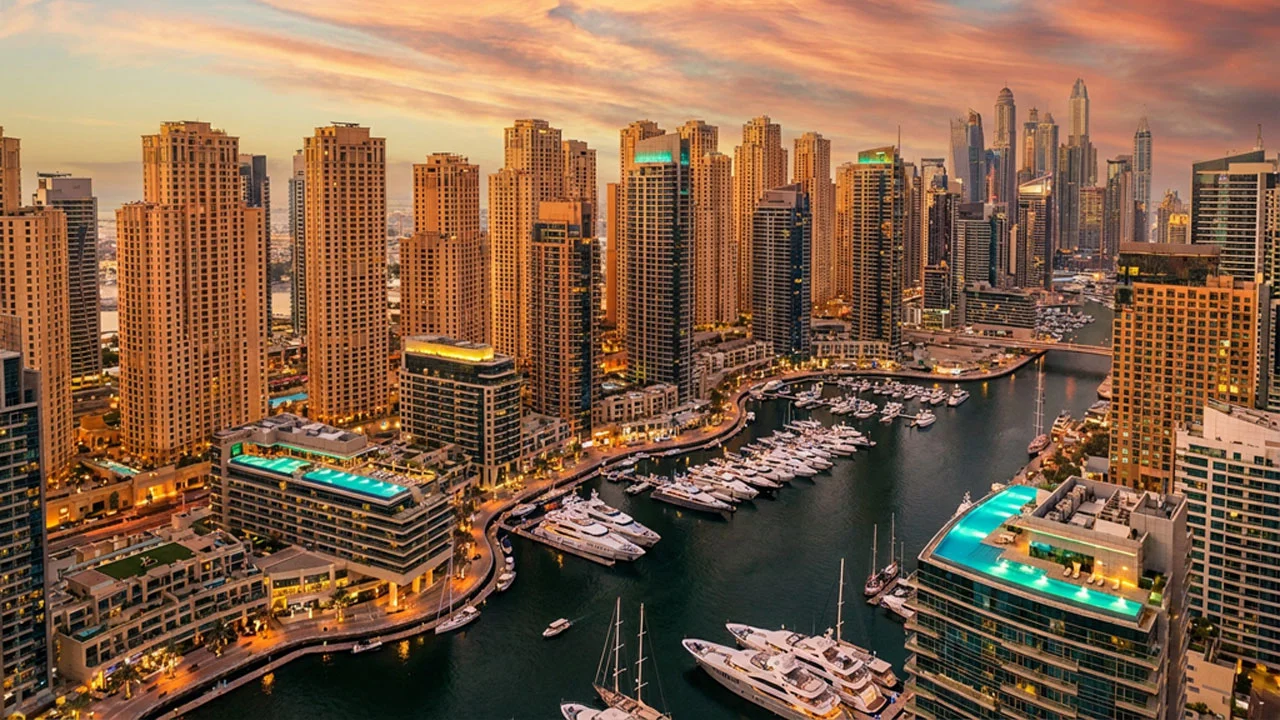
- Dubai Marina: 6–8% long-term; 10–12% short-term Airbnb in peak season
- Business Bay: 6.5–8%
- Downtown Dubai: 5–7% (long-term); yield compressed by high entry prices but compensated by capital appreciation
- Jumeirah Lake Towers (JLT): 7–9%
- Palm Jumeirah: 4.5–6.5% — lower yield but among the highest capital appreciation
- Dubai Hills Estate: 5.5–7%
- Mirdif: 7–8.5% for villas
These are gross yields calculated on annual rent divided by purchase price. Net yields (after service charges, maintenance, agency fees) are typically 1.5–2% lower.
Long-Term Rental vs. Short-Term Rental in Dubai: Which Yields More?
One of the defining decisions for Dubai landlords is whether to let on a 12-month tenancy or list on Airbnb and Booking.com for short-term stays. The yield differential can be dramatic:
A two-bedroom apartment in Dubai Marina that rents for AED 130,000/year on a standard annual tenancy might generate AED 180,000–220,000 per year on short-term rental platforms when consistently managed — a 40–70% income premium. However, short-term rental requires a DTCM (Dubai Tourism) holiday home license, active management or a property management company (who typically charge 20–25% of gross revenue), and higher maintenance costs from frequent tenant turnover.
For a hands-off investor, long-term annual tenancies provide stability and lower management burden. For investors willing to engage more actively (or hire a specialist manager), short-term rental in the right location can significantly outperform.
"For every pound of rental income earned in Dubai, an investor in London keeps perhaps 55 cents after tax. In Dubai, they keep all of it. That difference, compounded over a decade, is transformational."